
What is A blessingWay or Mother’s Blessing?
While a baby shower often focuses on gifts for the baby, a BlessingWay, or Mother’s Blessing centers on honoring the mother, her transition into motherhood, and the community supporting her through birth and postpartum.
Think of it as a circle of care, a gathering meant to nurture, uplift, and remind a mother that she does not walk this path alone.
The Origins of a BlessingWay
The term BlessingWay comes from a traditional ceremony within Navajo (Diné) culture. In that tradition, the Blessingway is a sacred spiritual ceremony meant to bring harmony, protection, and balance to a person’s life journey. It may be performed during major transitions such as birth, marriage, or other life passages.
Because the Navajo Blessingway is a sacred cultural practice, many birth workers today prefer to use the term Mother’s Blessing out of respect, while still honoring the spirit of gathering in support of the mother.
At its heart, the intention remains the same:
to surround her with love, encouragement, and community as she prepares to give birth.
What Happens at a Mother’s Blessing?
There is no single “correct” way to hold a Mother’s Blessing. Each gathering is unique and often shaped by the personality, values, and spiritual traditions of the mother being honored. Just like pregnancy, and birth, it is a personal affair where no two gatherings look the same.
Typically, the gathering is small, intimate, and centered around meaningful connection rather than games or gift-opening.
Some common elements include:
-Creating Sacred Space
The ceremony often begins with a quiet moment to ground the group. Candles, flowers, affirmations, meaningful objects, or nature elements may be placed in the center to create a calm and intentional atmosphere.
-Sharing Stories and Wisdom
Guests may share birth stories, words of encouragement, or reflections about motherhood. These stories can help normalize the range of experiences around birth and remind the mother that she carries strength and support within her community.
-Blessings or Affirmations
Guests may offer written blessings, prayers, intentions, or affirmations for the mother. Sometimes these are placed in a keepsake book or read aloud during the gathering, other times she can read them as she feels the sensations of early labor, or can reflect at a later date.
Ritual Activities
Different traditions might include symbolic activities such as:
-Bead ceremonies where each guest brings a bead representing strength or love for the mother
-Red thread or bracelet ceremonies where guests wear matching threads until the baby is born
-Foot washing or gentle massage to physically nurture the mother
-Candle lighting where each guest lights a candle during the mother’s labor at home
-Painting or Henna Belly art this is a fun way to connect with mother and womb, while also caring for her through touch
-Adornments or Braiding of the hair physical touch, acts of service and helping support mother feel beautiful and cared for in this space
These rituals are simple but powerful ways of reminding the mother she is held in community even when birth unfolds. A reminder that she is not alone.
Nourishing Food
Something that should not be forgotten or overlooked. A lthough food may not feel as glamourous as flower crown or foot soak, it is an important way to nourish your body during a minerally depleted time. Sharing food together is often part of the gathering. Some groups even prepare freezer meals for postpartum, turning celebration into practical support. If you don’t want to have the space turned into a meal prep station, you can ask guests to bring homemade snacks or dishes to fill your freezer and nourish you even in your scared postpartum time.
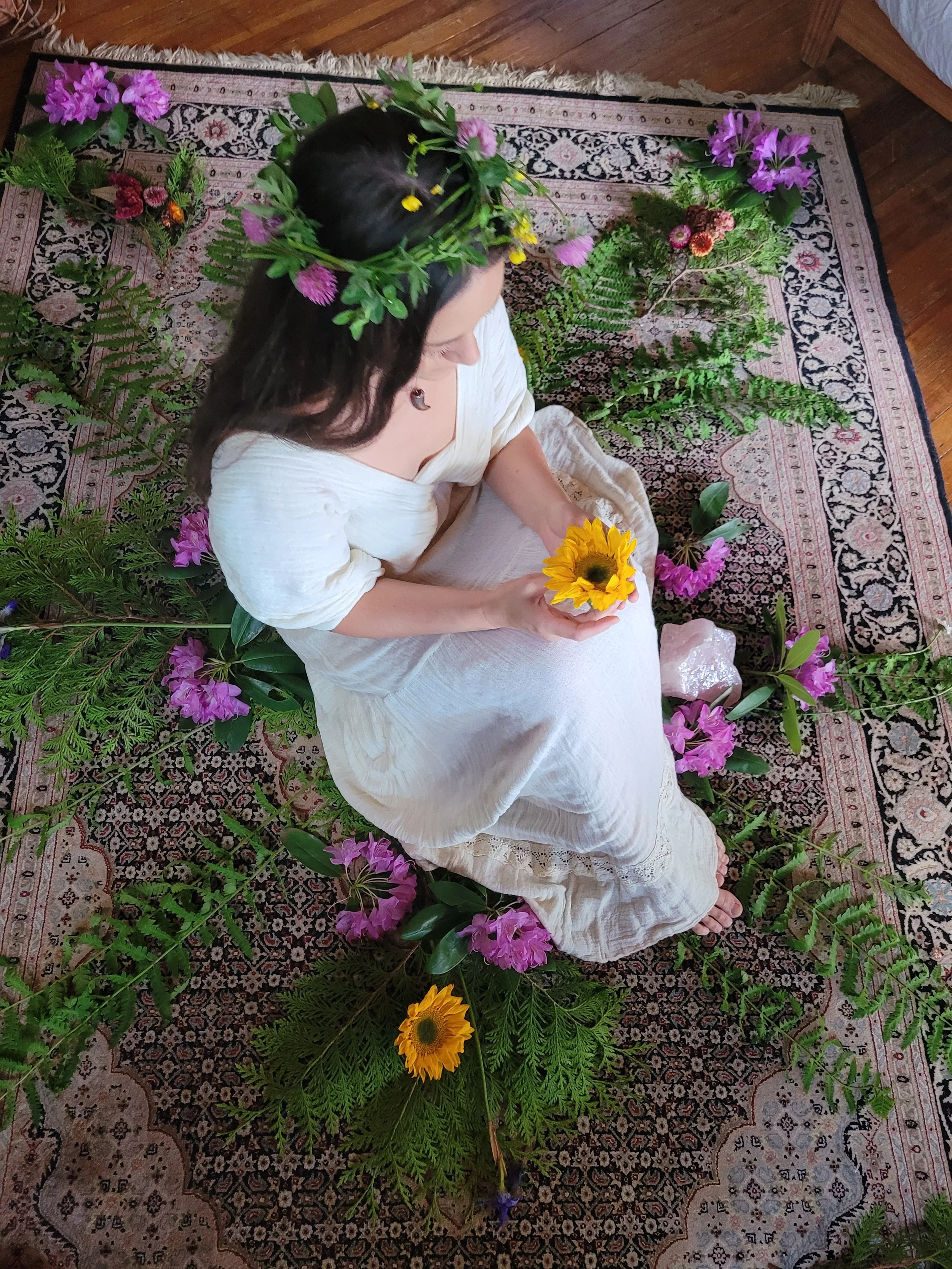
Honoring a beautiful mama on her special day
The Role of a Doula or a Facilitator
A Mother’s Blessing usually benefits from someone gently guiding the flow of the gathering. This is where a facilitator, such as a doula or experienced birth worker, can help.
The facilitator’s role is not to lead the ceremony in a rigid or performative way. My goal is to not give a big speech, do a Q & A, or perform what I’m sure would be a very memorable dance. Instead, help hold the space so the gathering flows naturally and remains centered on the mother. Just like I would do during your pregnancy and labor, my goal is ensure you are seen, heard and cared for above all else.
Some of the things a doula can help facilitate, include but are not limited to
-Help plan the structure of the gathering
Would you like one or two activities and then a loose mingling and gathering? Or would you like to make sure all your ideas are met without having to worry about it? Do you need help with invitations, space location or caterers?
-Offer suggestions for rituals or activities
As the ones mentioned above, we are open to discussing in depth more activities, and incorporating any special rituals you wish in have in your Mother’s Blessing
-Ensure the tone stays supportive and centered on pregnant person’s emotions and feelings
-Guide transitions between activities
-Create a safe, calm environment for sharing
Importantly, the facilitator does not take ownership of the ceremony. The gathering belongs to the mother and her community.
Their role is simply to support the container that allows connection, reflection, and celebration to unfold.
Why Many Families Are Choosing Mother’s Blessings
Pregnancy and birth are profound life transitions, yet modern culture often rushes through them with busy schedules and gift registries. If gifts are a desire, we encourage them to be from the heart, and centered on the pregnant person.
A Mother’s Blessing invites us to slow down.
It creates space to honor the emotional, spiritual, and physical transformation happening within a woman as she prepares to give birth. It is steeped in beauty and intention, creating a beautiful starting space as she makes her way into the unknown. Many women are already exhausted, and swimming in overwhelm by the time of their third trimester. Wouldn’t it be wonderful if instead of giving her another task, we can her a container in which we nourish her with love, and care, and recognize all the work she has done?
More than anything, it reminds her of something deeply important:
She does not have to do this alone.
